
Care home leak detection
in Greater London
ADI Leak Detection investigates hidden water, heating and hot-water leaks in residential, nursing and dementia care homes across Greater London. The investigation is planned with your staff around residents' routines.
Call ADI on 0800 852 7763Read the local investigationLines open Monday–Friday, 7:30am–6:30pm
Find the source.
Consider the people.
Where ADI covers care homes in Greater London
Greater London place examples
- Ilford
- Sutton
- Enfield
- Purley
- Romford
- Croydon
- Harrow
- Wembley
- Bromley
- Streatham
- Surbiton
- Barnet
Map of Greater London
Case study: a hot-water return leak in a London care home boiler room
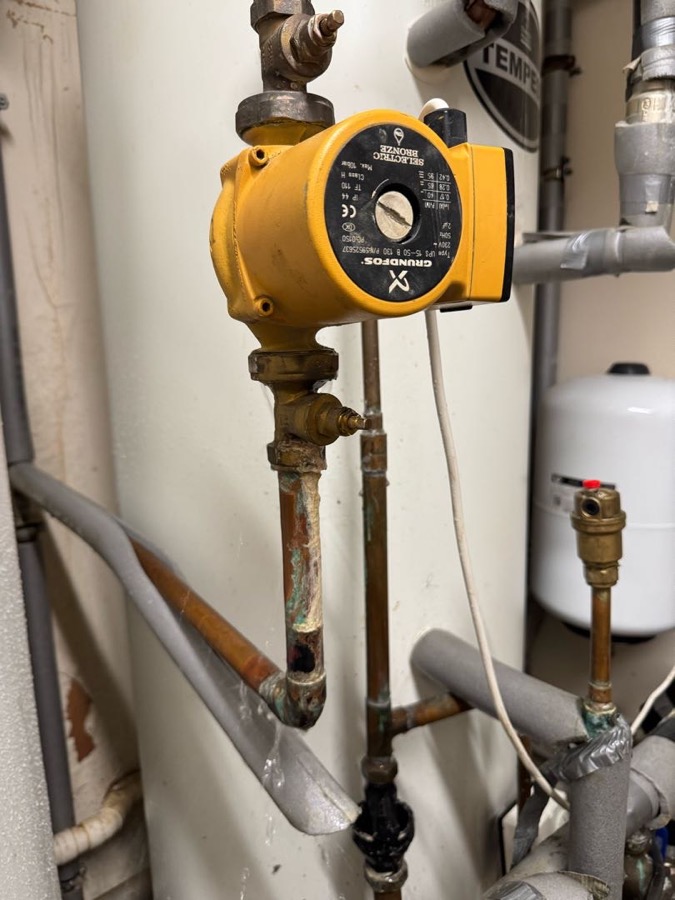
At a London care home, the engineer found a continuous leak on the hot-water secondary return in the boiler room. It was thought to contribute to damp in the basement, but the investigation did not establish it as the only cause.
A one-hour hot-water isolation window was agreed around the residents, allowing a pump union and washer repair. Pressure testing and retesting were not permitted on the visit. The report recommended monitoring the damp and addressing other observations, including absent boiler pressure and outside pooling. It does not establish that the basement dried or that every water problem was resolved.
What to mention when you call about a care home leak in Greater London
Very hard water in Greater London
Greater London’s water is very hard, at 280 to 360 mg/l, so limescale builds up inside hot-water pipework, cylinders and heating circuits. Mention any heating or hot-water symptoms when you call.
Heating and hot water leaksWho repairs the supply pipe under a care home’s grounds?
The supply pipe from the boundary stop tap into the building is the owner’s to repair, including under a car park or garden. Care homes are business customers, so a leak allowance goes through your water retailer.
Report a leak on the public side to Thames Water or SES Water.
Water mains leaksCare groups with homes in more than one London borough
If your care group runs homes across several London boroughs, give ADI every postcode on the first call and discuss how the visits could be arranged.
Managing leaks across several homesListed and conservation-area care homes in London
If your care home occupies a listed building or a property in one of London's conservation areas, let ADI know when you call. Planning constraints may affect how access and any remedial work is approached, and the investigation can be scoped accordingly.
Green upgrades for London's heritage homesWhere Thames Water’s responsibility ends for London care homes
Thames Water is responsible for the water main and the pipe up to the boundary stop tap. From that point, the supply pipe into the building is the property owner's responsibility to maintain and repair. If your care home has a suspected leak on the supply side, mention this when you call.
Thames Water pipe responsibilityLeak detection services
for care homes in Greater London
ADI investigates leaks on the water mains, heating and hot water, bathrooms and wet rooms, roofs, hidden pipework and drains that serve care homes.
Water mains and underground supply pipe leaks
Check unexplained consumption and accessible supply pipes.
Explore serviceHeating circuit and hot water pipework leaks
Investigate heating and hot-water pressure loss.
Explore serviceBathroom, wet room and assisted shower leaks
Separate supply and waste leaks in bathing areas.
Explore serviceCeiling, structural and hidden cavity leaks
Trace concealed pipework behind damp walls or ceilings.
Explore serviceRoof ingress and building leak inspections
Investigate roof ingress; building repairs need the relevant contractor.
Explore serviceDrain leak and drainage defect investigations
Discuss suitable drain testing and available access.
Explore serviceHow ADI minimises disruption in occupied care homes
ADI plans each visit with your staff around residents’ routines, room access and essential services, then uses the evidence to narrow the search before any opening up.
- 01
Pre-visit planning around residents and safeguarding
Discuss room access, resident routines and the essential services your home relies on with ADI before the engineer arrives.
- 02
Non-invasive thermal and acoustic leak tracing
Thermal imaging and acoustic listening help the engineer narrow the search for the leak before any opening-up work is considered.
- 03
Clear reports for estates managers and insurers
Recorded findings, with photographs or video where appropriate, help your estates team and insurer understand the problem and plan the next step.
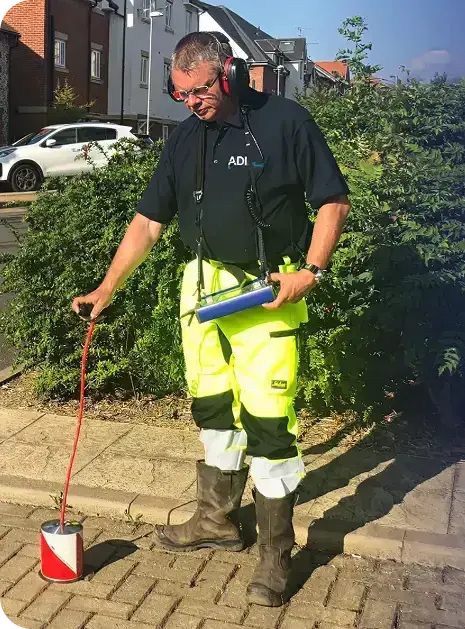
An experienced approach.
Leak detection equipment
used in care homes
ADI’s engineers choose between acoustic detection, thermal imaging, tracer gas, moisture mapping, pressure testing and inspection cameras to suit the pipework and building. No single instrument finds every leak.
About our detection methodsAcoustic leak detection
Acoustic leak detection uses sensitive listening equipment to help an engineer locate the sound of escaping water, including beneath ground and floors.
Thermal imaging for leak detection
Thermal imaging uses a camera that shows surface temperature differences, which can help an engineer investigate heating pipework and moisture patterns.
Tracer gas leak detection
Tracer gas leak detection uses a specialist gas mixture to help trace a leak from a suitable isolated pipe to a detectable point at the surface.
Moisture mapping
Moisture mapping takes measurements across walls, ceilings or floors to build a picture of where moisture is concentrated in the building.
Pressure testing pipework
Pressure testing checks suitable sections of pipework to help establish which part of a heating or water system is losing pressure.
CCTV drain surveys and inspection cameras
Drain cameras and borescopes give the engineer a view into accessible drainage and concealed spaces that cannot otherwise be seen.
Leak detection for residential, nursing and dementia care homes in Greater London
ADI investigates leaks in residential care homes, nursing homes, dementia care settings and care groups, planning each visit around the people, building and access arrangements. Tell us about yours.
Discuss your care homeLeak detection in residential care homes
Leak investigations in residential care homes are planned around bedrooms, shared bathrooms, dining areas and the home’s daily routine, with a named staff contact.
Leak detection in nursing homes
Make essential water and heating requirements part of the nursing home’s brief from the first conversation, including the services that must remain available.
Leak detection in dementia care settings
In dementia care settings, explain visitor procedures, staff escort requirements and any areas where unexpected activity should be avoided before the engineer arrives.
Leak detection for care groups and retirement living
Care groups and retirement living operators can make one clear enquiry for their estates team, with the practical details agreed for each property.
ADI Leak Detection reviews:
rated 4.7 out of 5 on Trustpilot
A selection of ADI’s 5-star reviews. Figures checked on 11 September 2026.
Read all 1,608 reviews on TrustpilotSelected excerpts from five-star reviews of ADI’s wider service across the UK.
Kristof put in the effort to properly get to the root cause and fix it, he had to work hard all day.
Paul Clark · 15 September 2026Read on Trustpilot He gave a realistic analysis of a complex leak problem during his first exploratory visit.
Jenny Sneddon · 24 July 2026Read on Trustpilot
Common questions about care home leaks
in Greater London
These answers cover ADI’s coverage, supply pipe repairs, water supply and planning a visit around residents for care homes in Greater London.
Ask ADI a questionDo you cover the whole of Greater London?
ADI’s nationwide leak detection service includes Greater London, and the team confirms availability for your care home’s postcode when you call. The towns on this page are examples.
Can the investigation work around our residents?
Yes, access and any testing interruptions are agreed with the home's staff before the engineer arrives, and your team approves any isolation. When you call, tell ADI about occupied rooms, visiting times and any services that must stay on.
Who repairs a leak on the supply pipe under our grounds?
Usually the property owner, because the supply pipe running from the boundary stop tap into the building is the owner's to maintain and repair. Thames Water is responsible for the water main and the pipe up to the boundary stop tap. Care homes are business customers, so any leak allowance is claimed through your water retailer.
Which water company supplies our care home in Greater London?
Thames Water supplies most of Greater London, and SES Water supplies parts of south London, including areas around Morden and South Croydon. Check your water bill or contact your water retailer to confirm which company supplies your site.
Does Greater London's water hardness affect pipework?
It can, because Greater London's water is very hard, and limescale build-up is a possibility in older hot-water pipework, cylinders or heating circuits. Mention any hot-water or heating symptoms when you call and the investigation can cover those systems.
Are the engineers DBS checked?
Ask ADI to confirm the attending engineer's current checks and documentation when you book, and share your home's safeguarding, escort and visitor requirements. The visit can then be arranged to meet them.
Book a care home leak investigation
in Greater London
Call ADI with the home’s postcode and a description of what you’ve noticed, and the team will talk through the next step.