Water mains and underground supply pipe leaks
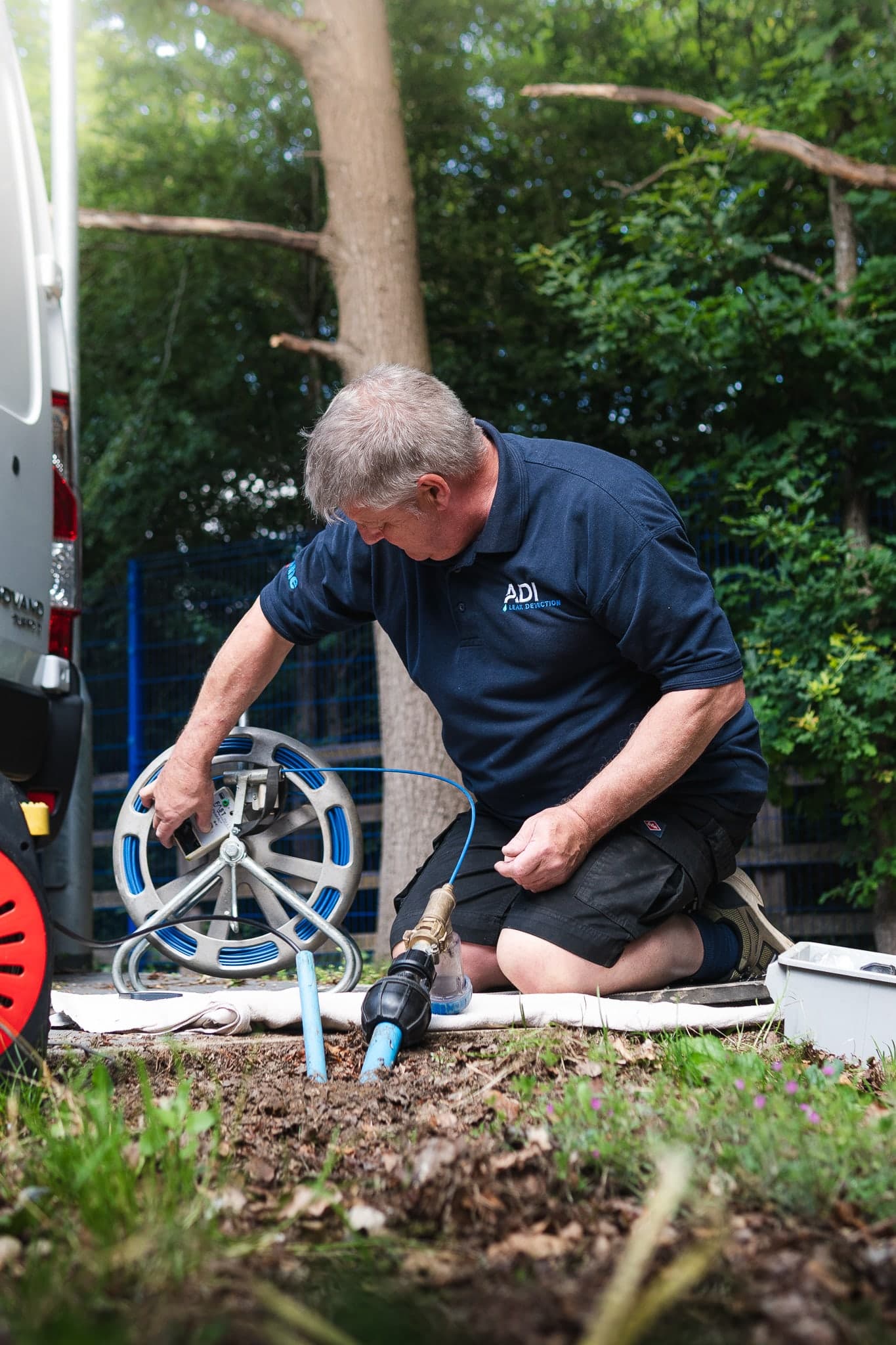
ADI investigates leaks on underground water mains serving care homes, from the incoming supply to the pipes that run between separate buildings and wings.
View this service
ADI Leak Detection finds hidden water leaks in care homes across the UK using acoustic listening, thermal imaging and tracer gas, planning each visit around residents and staff.
A rising water bill, damp or staining, and a heating system that keeps losing pressure are the usual signs. Behind every care home door, there’s a daily routine worth protecting.





ADI investigates leaks on the water mains, heating and hot water, bathrooms and wet rooms, roofs, hidden pipework and drains that serve care homes. Choose the area that matches what your staff have noticed.
ADI investigates leaks on underground water mains serving care homes, from the incoming supply to the pipes that run between separate buildings and wings.
View this serviceADI investigates heating and hot water pipework in care homes to help establish where water is escaping when a system keeps losing pressure.
View this serviceADI investigates leaks from care home bathrooms, en suites and wet rooms to establish whether water is coming from a supply pipe, a waste connection or the shower area.
View this serviceADI investigates hidden pipe leaks behind care home walls, floors and ceilings, where the visible stain is often some distance from the fault.
View this serviceADI investigates roof and building water ingress at care homes to help identify the defect behind damp that returns after rainfall.
View this serviceADI offers drain leak investigations for care homes, including CCTV surveys where suitable access is available, to look for drainage defects beneath the property.
View this serviceADI’s engineers choose between acoustic detection, thermal imaging, tracer gas, moisture mapping, pressure testing and inspection cameras to suit the pipework and building. No single instrument finds every leak, so the methods are combined to narrow the search before any opening up is agreed with your team.
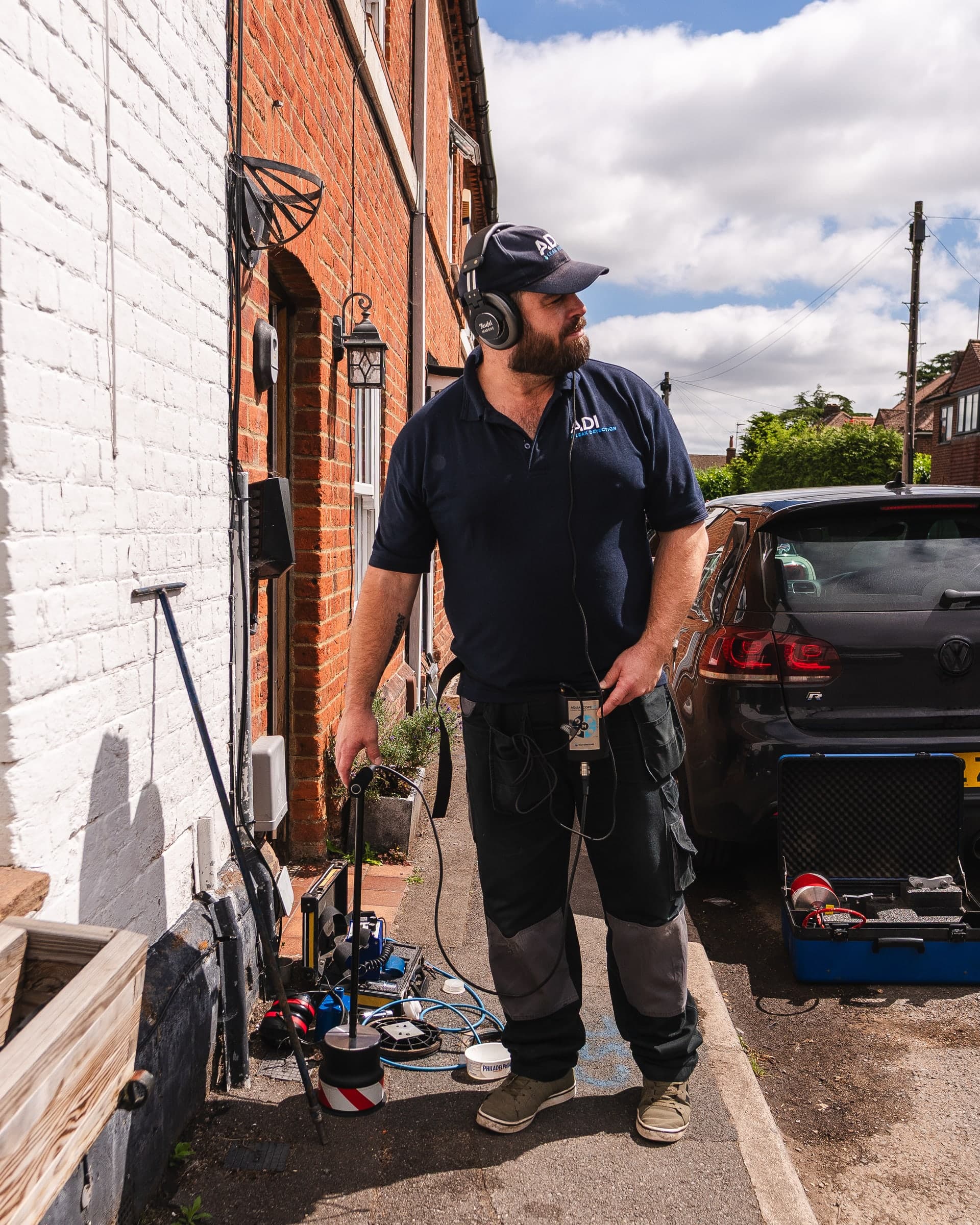
Acoustic leak detection uses sensitive listening equipment to help an engineer locate the sound of escaping water, including beneath ground and floors.
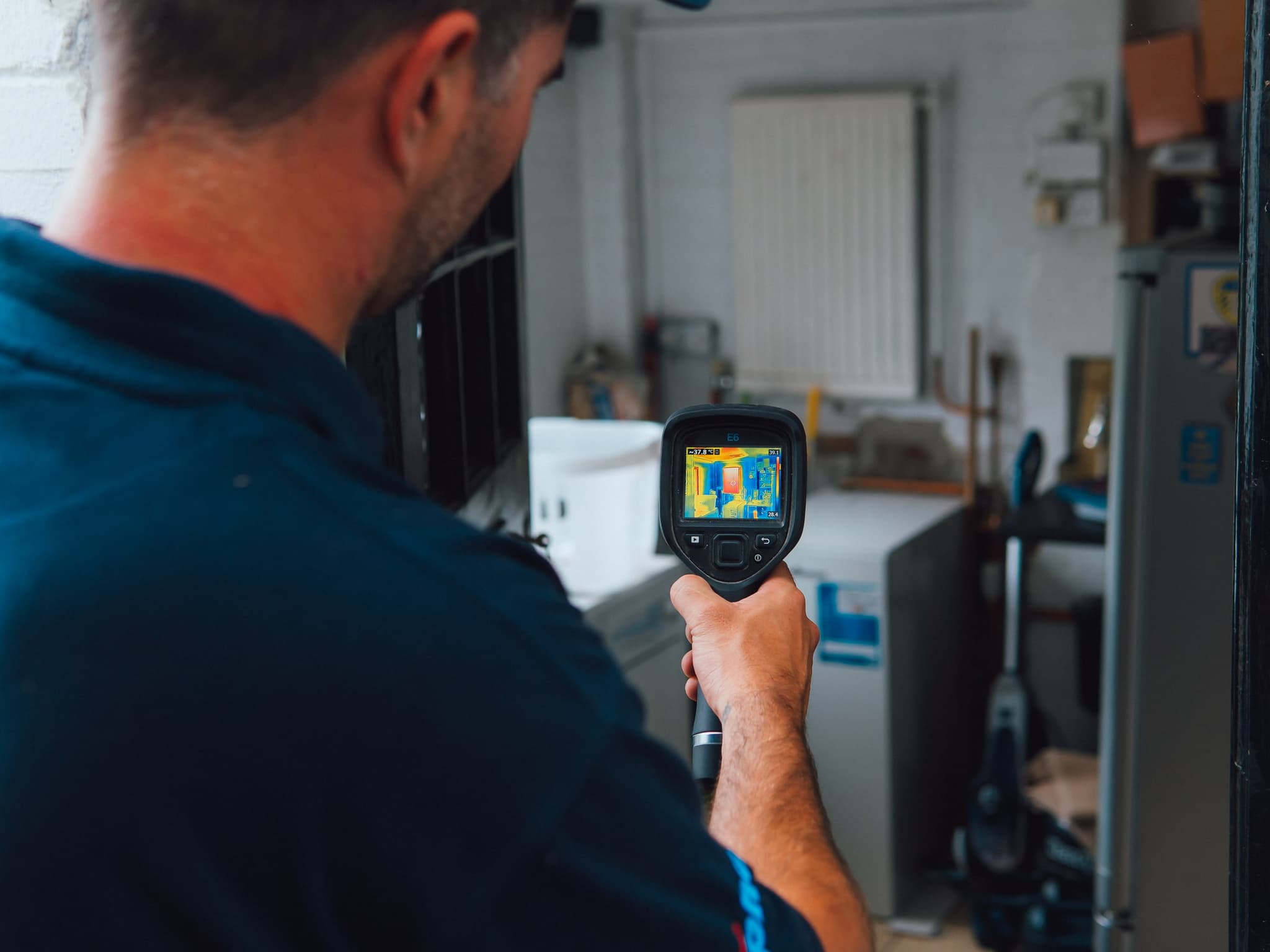
Thermal imaging uses a camera that shows surface temperature differences, which can help an engineer investigate heating pipework and moisture patterns.
Tracer gas leak detection uses a specialist gas mixture to help trace a leak from a suitable isolated pipe to a detectable point at the surface.
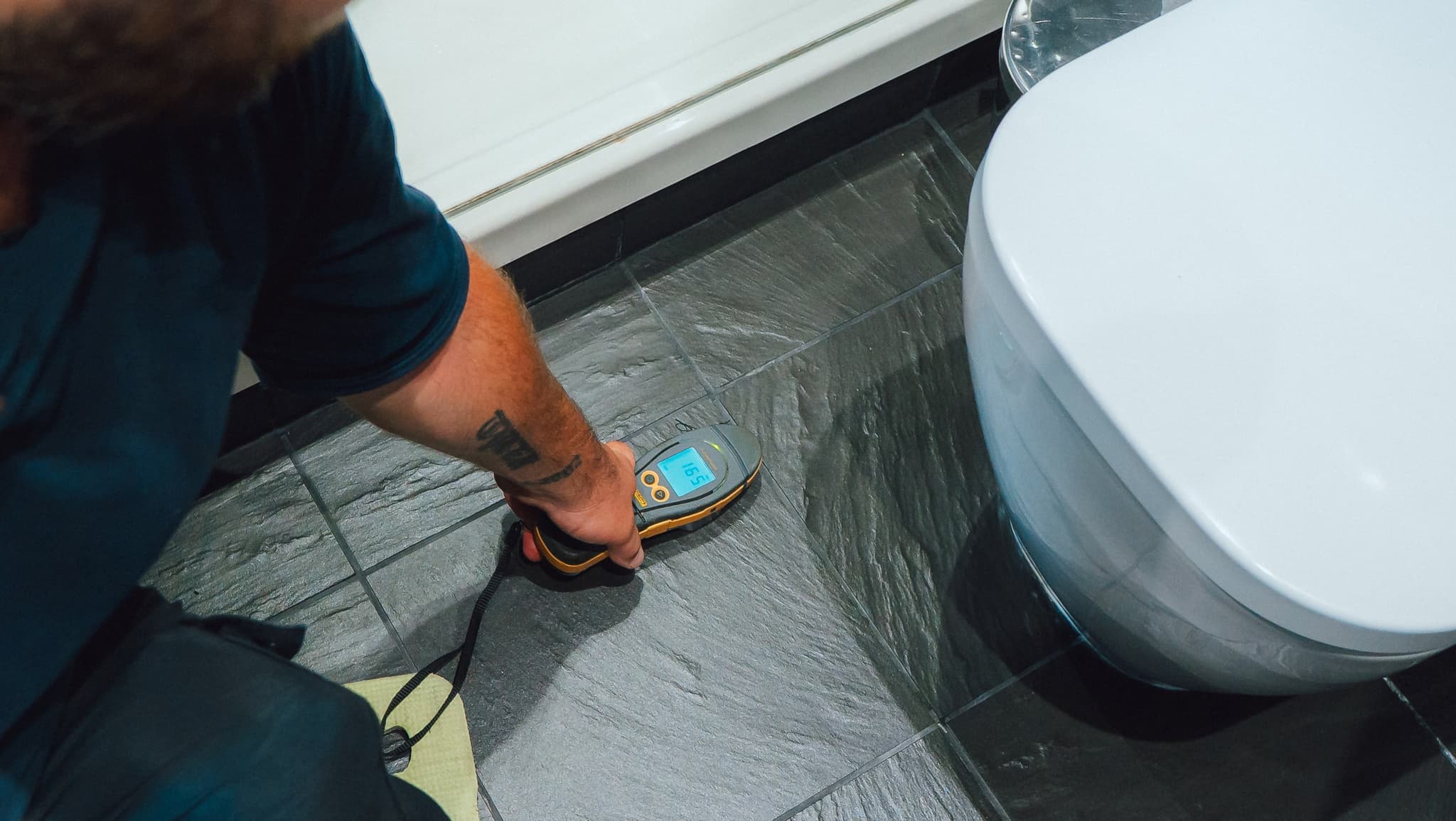
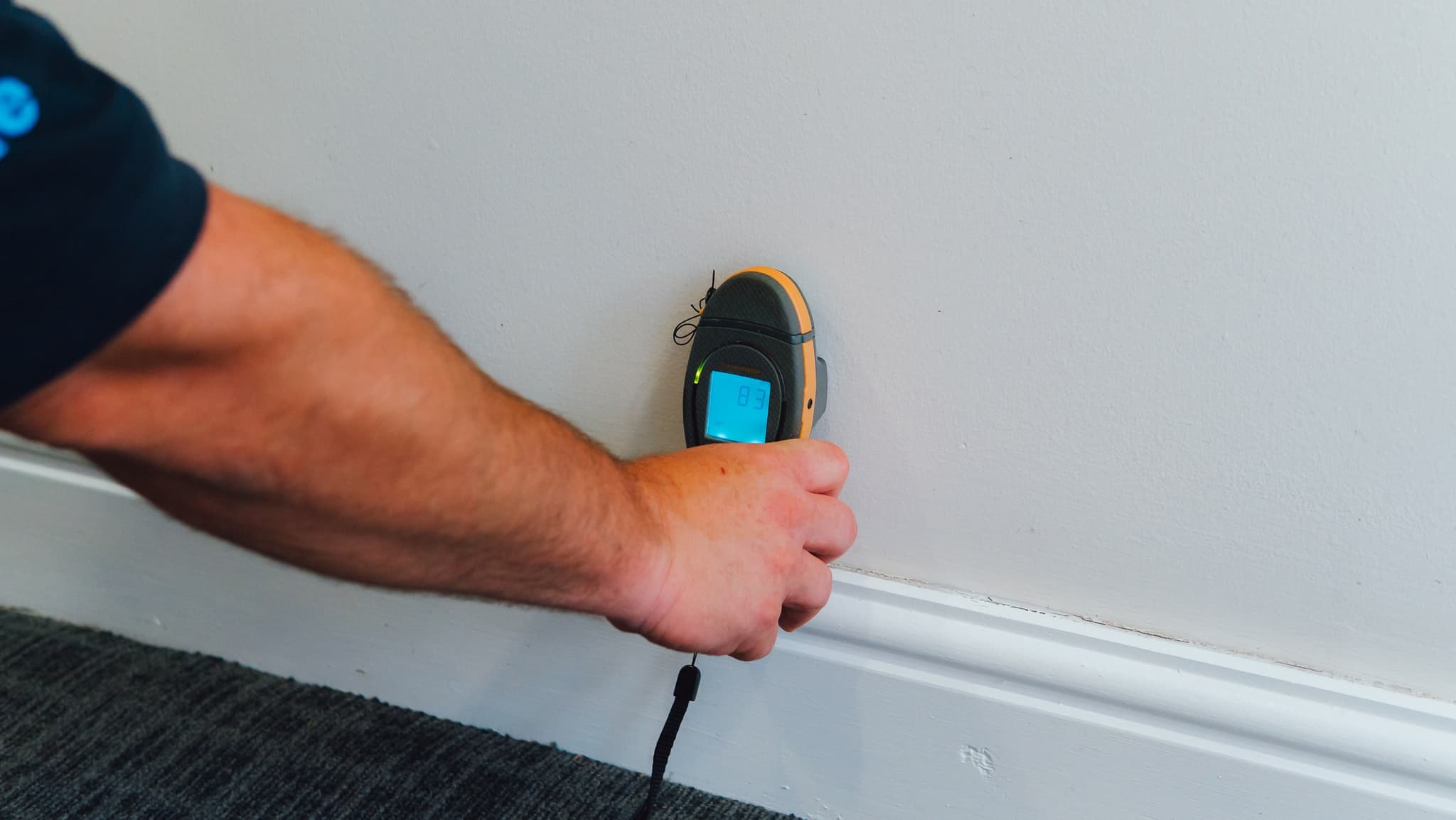
Moisture mapping takes measurements across walls, ceilings or floors to build a picture of where moisture is concentrated in the building.
Pressure testing checks suitable sections of pipework to help establish which part of a heating or water system is losing pressure.
Drain cameras and borescopes give the engineer a view into accessible drainage and concealed spaces that cannot otherwise be seen.
These four anonymised ADI Leak Detection investigations show how leaks were traced in working care homes, what was repaired and what the home still had to arrange. Every photograph was taken during the job it appears with.
Visited March 2025
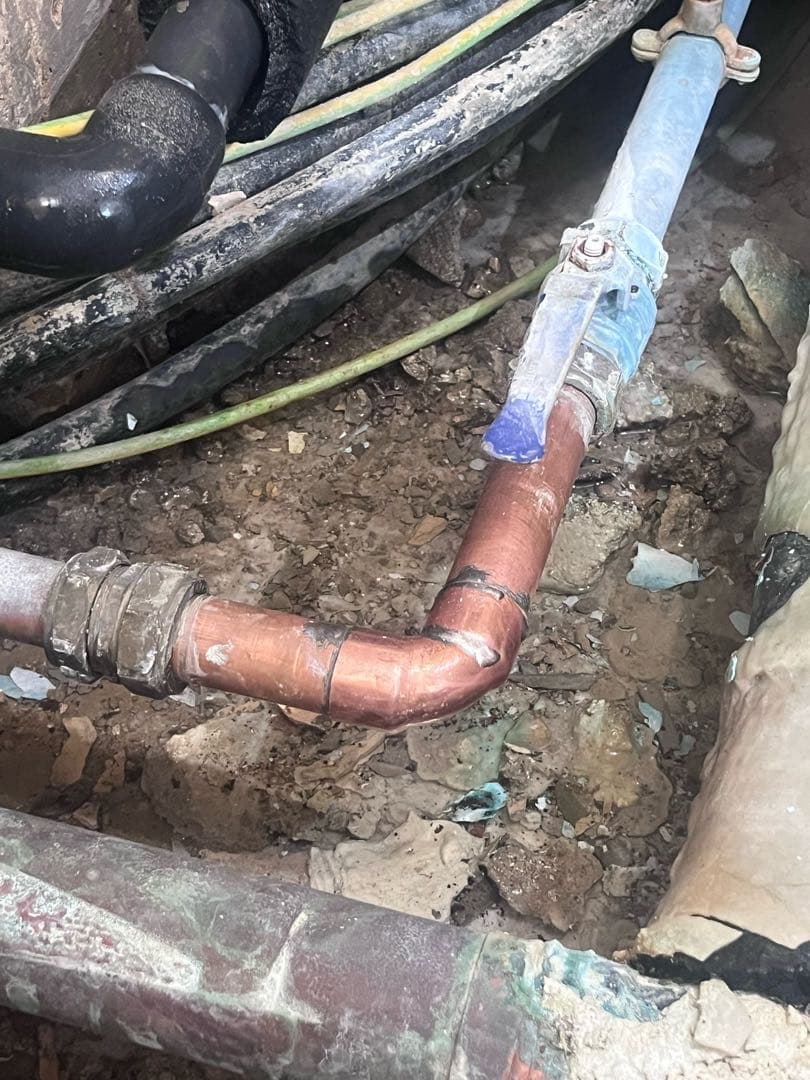
Water was passing through the floor and cavity wall into the plant room. ADI’s investigation had to account for a busy care home where hot water was still in use.
Visual inspection and a thermal camera helped trace the pipe layout and locate a hotspot near a covered inspection hatch. Pressure testing was not possible while the hot-water system remained in use.
Working with the caretaker, the engineer removed laminate and screed to open the hatch. This exposed a leaking 28 mm copper hot-return pipe.
The hot-water circuit was drained, the affected pipework was repaired and re-piped, and the supply was restored. The engineer then made a visual check. This was not a pressure-test pass or confirmation that the entire system was free of other leaks.
Opening the hatch disturbed the flooring. The caretaker was to arrange its repair, and the report recommended keeping the inspection access available for future maintenance.
Pipework exposed during this investigation. Access through the floor was needed to reach the leak.
Visited December 2025
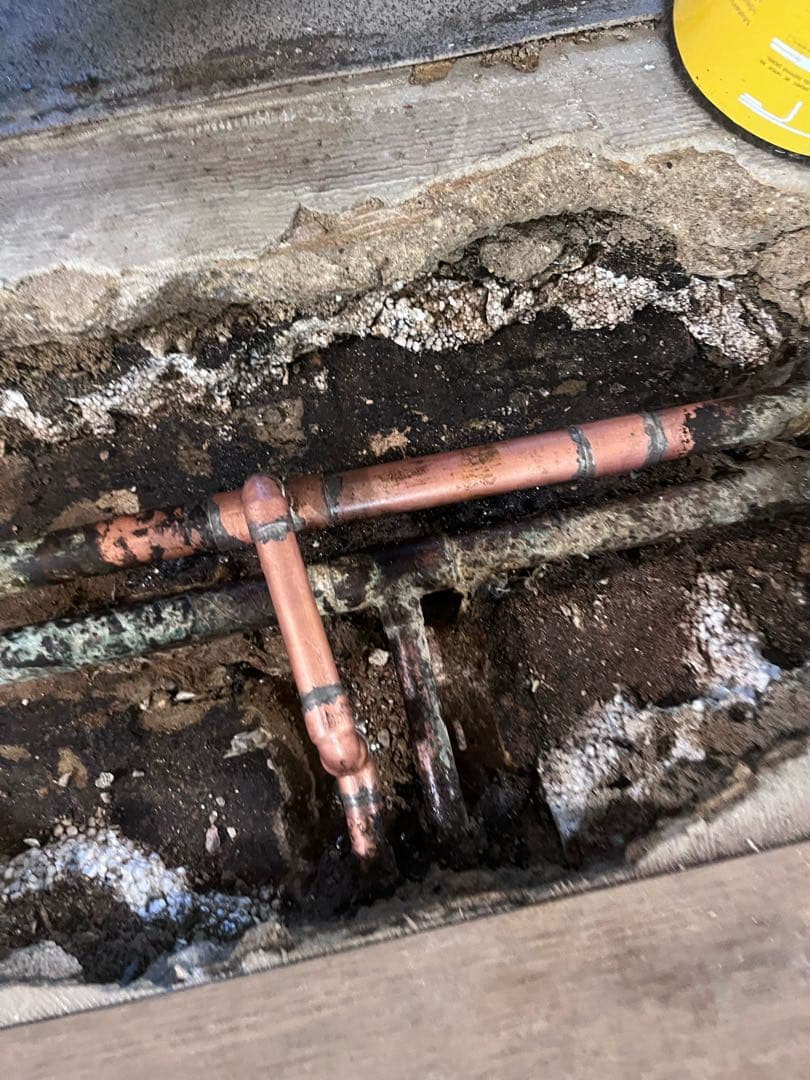
A care home’s heating system was losing pressure. The building has both radiator and underfloor heating circuits.
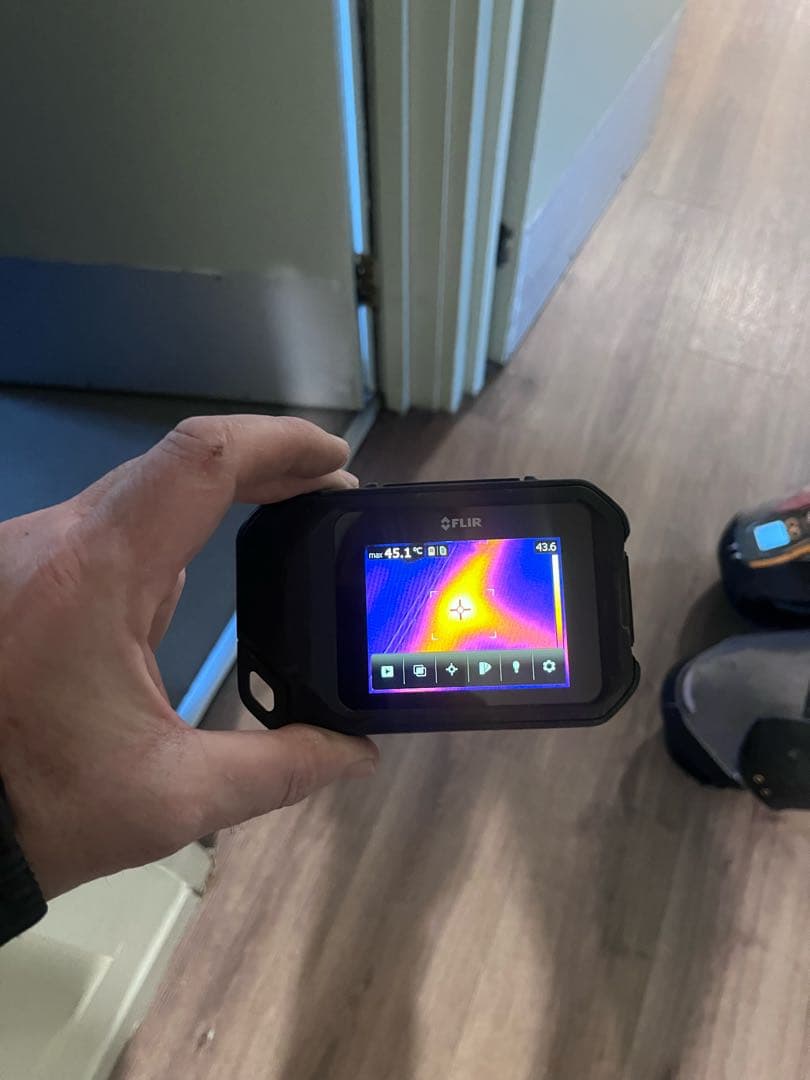
The engineer isolated the heating circuits, then used a thermal camera and moisture readings to narrow the search. A hotspot and high moisture readings led to an area of wet flooring. The leak was on a heating pipe running beneath the concrete.
The concrete over the leak was excavated and the leaking section of copper pipe replaced, using endfeed fittings. The engineer refilled the system, bled the radiators and reopened the underfloor heating circuit. When checked afterwards, the system was holding its pressure.
Reinstating the concrete and latex screed over the repair was left for the home to arrange. The report also recommended rerouting the radiator pipework to run from above if leaks came back.
The heating pipework exposed beneath the concrete floor. The thermal camera picked up a hotspot in the floor.
Visited January 2026
The basement of an occupied care home had extensive damp, with high moisture readings in the floor.
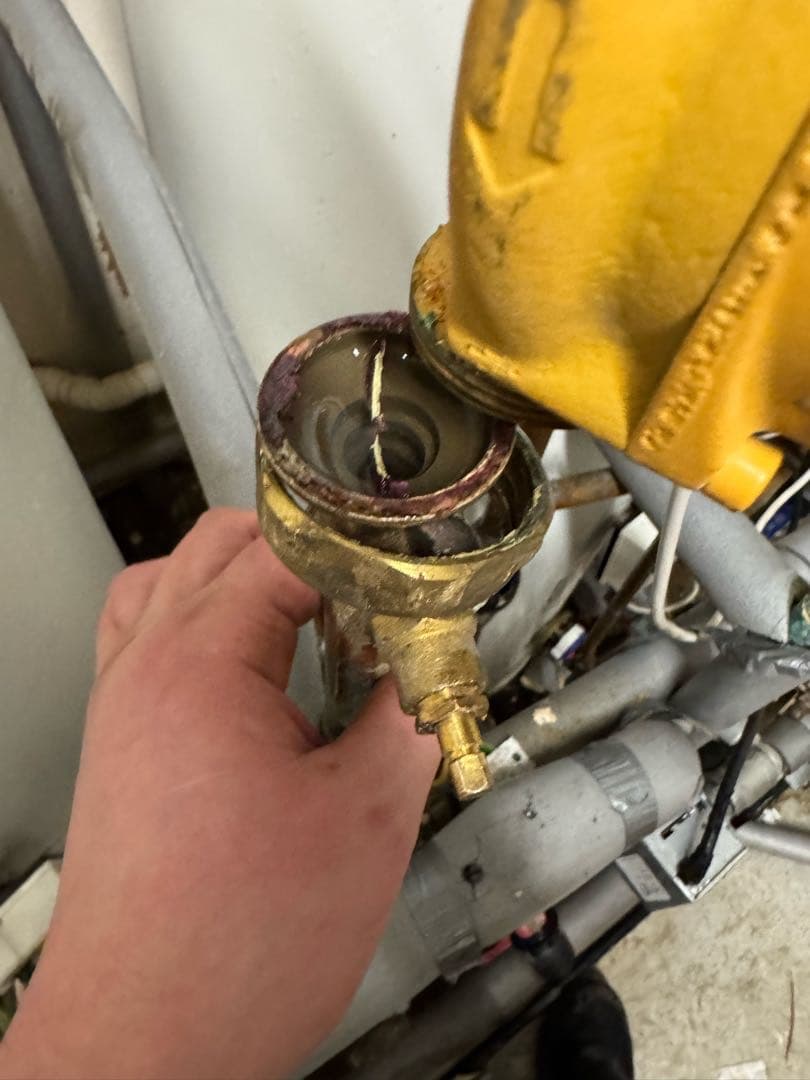
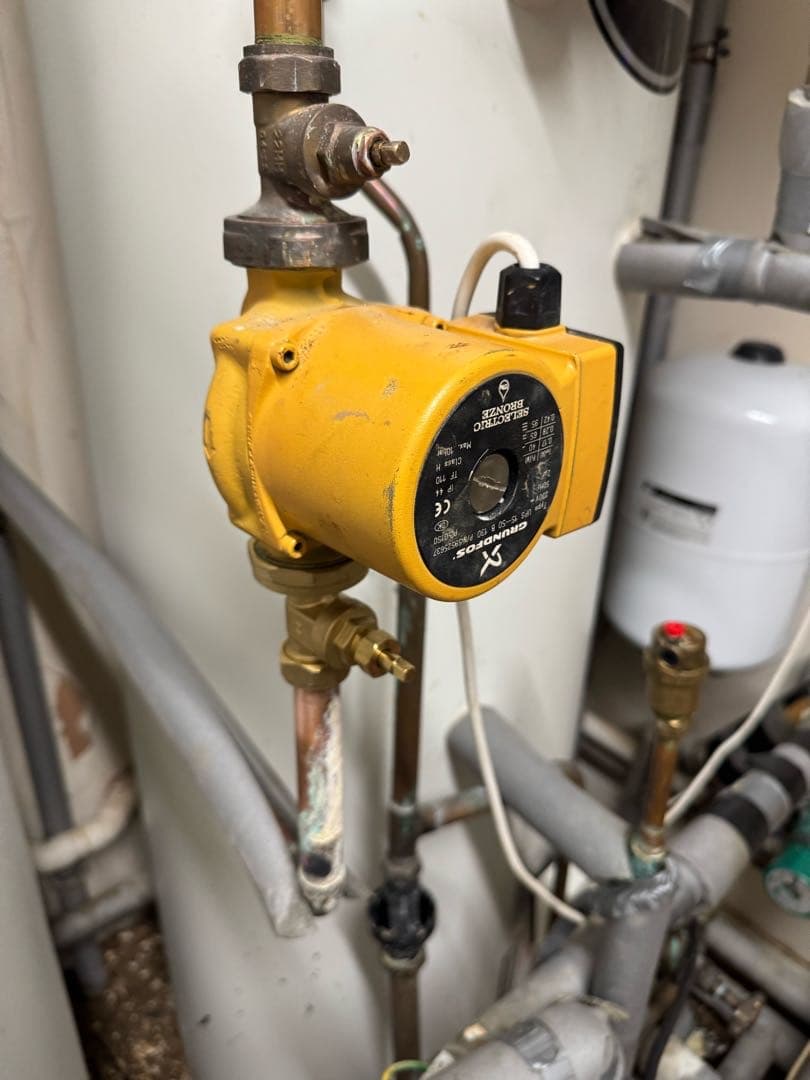
A visual inspection found a union on the hot-water secondary return leaking continuously above the concrete slab. Its fibre washer had perished. The leak may have been adding to the damp, but it was not proven to be the only cause.
The engineer drained the hot-water cylinder, replaced the washers on both sides of the pump union and fitted one new pump union. Operational constraints at the home meant the system could not be retested afterwards.
Mains leakage was not checked, because no water meter was available. The report recommended monitoring the basement damp and the boiler pressure, and considering dehumidification and a water meter to support further investigation. Water pooling outside was noted as a possible separate source.
The pump union opened up during the repair. The hot-water pump with a union on each side.
Visited July 2025
A care home’s garden tap had no water. Its supply pipe ran underground, beneath paving.
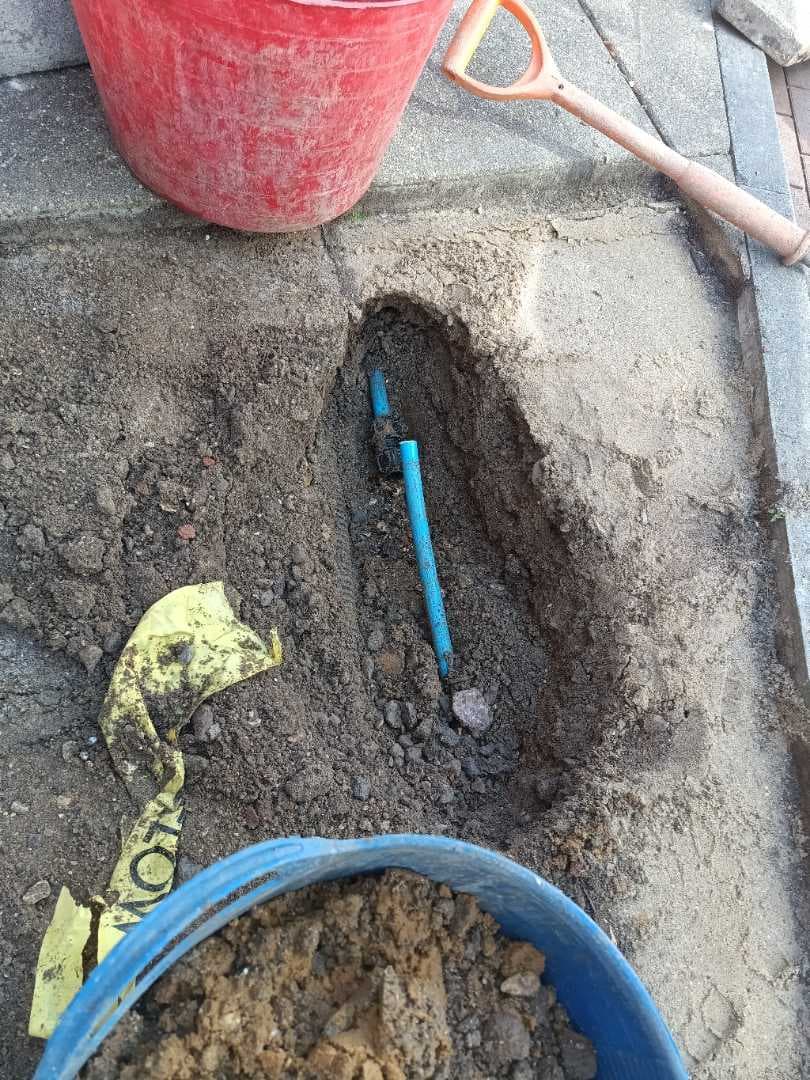
The engineer traced the supply route and put the pipe under pressure with a compressor, then reintroduced water and used acoustic listening equipment along the line. That located the fault under the paving. When it was dug out, the pipe had come away from its fitting and the gasket was damaged.
The pipe was reconnected with a new gasket, using blue MDPE water pipe and fittings. A pressure test afterwards held, the garden tap had water again and no further leaks were found at that test.
The trench was backfilled and the paving slabs relaid. The report recorded no further recommendations. As with any repair, the test result describes the pipe on the day it was checked.
The supply pipe exposed under the paving. The damaged gasket, removed from the fitting.
ADI plans each visit with your staff around residents’ routines, room access and essential services, then uses the evidence to narrow the search before any opening up. Care staff may have noticed a damp patch before anyone reported it, and maintenance may know the boiler keeps losing pressure, so bring both to the first call.
Discuss room access, resident routines and the essential services your home relies on with ADI before the engineer arrives.
Thermal imaging and acoustic listening help the engineer narrow the search for the leak before any opening-up work is considered.
Recorded findings, with photographs or video where appropriate, help your estates team and insurer understand the problem and plan the next step.
ADI investigates leaks in residential care homes, nursing homes, dementia care settings and care groups, planning each visit around the people, building and access arrangements. Tell us about yours.
Leak investigations in residential care homes are planned around bedrooms, shared bathrooms, dining areas and the home’s daily routine, with a named staff contact.
Make essential water and heating requirements part of the nursing home’s brief from the first conversation, including the services that must remain available.
In dementia care settings, explain visitor procedures, staff escort requirements and any areas where unexpected activity should be avoided before the engineer arrives.
Care groups and retirement living operators can make one clear enquiry for their estates team, with the practical details agreed for each property.
Care home managers choose ADI because it has found hidden leaks since 2011, with 25+ engineers and enquiries taken from across England, Scotland, Wales and Northern Ireland. Carehome Leak Detection is a specialist service from ADI Leak Detection.
ADI carries £5 million public liability insurance and can supply the risk assessment and method statement your home asks for before the engineer starts, so your health and safety file has what it needs.
ADI’s accreditations cover plumbing and heating, water regulations and swimming pools, and its engineers carry CSCS cards for work on commercial sites.
ADI holds a TrustScore of 4.7 on Trustpilot from 1,608 customer reviews of its leak detection work, checked on 11 September 2026. Read the reviews on Trustpilot.
Call ADI on 0800 852 7763 with the home’s postcode and what you have noticed, and the office will quote for your investigation and confirm current availability. Have the affected rooms and systems to hand.
Monday–Friday, 7:30am–6:30pm
Calls reach ADI’s office team in High Wycombe, who quote each care home investigation for the building and the work required.
See contact detailsLeak detection can be planned for an occupied care home, but suitability depends on the building, the suspected leak and the investigation required. Tell ADI about occupied rooms, visiting arrangements and essential services when you enquire. Access and any testing interruptions need to be agreed with the home’s staff.
Not always, because ADI uses non-invasive equipment to narrow down the source first, though some leaks still need opening up to confirm the fault or carry out a repair. Ask the team to explain the likely approach for your site.
ADI advertises a nationwide commercial service, so send your care home’s postcode and the team will confirm coverage, travel arrangements and the next available appointment. This is especially worth checking for islands and remote locations.
Yes, ADI provides leak investigation reports, with photographic or video evidence where appropriate, that can be shared with your estates team. Explain who needs the report and what they need to decide, and confirm the reporting scope when booking.
The cost depends on the suspected leak, the systems involved, site access and the scope of testing, so contact ADI for a quotation for your care home. Confirm what is included in detection, reporting and any repair work.
Ask ADI to confirm whether the attending engineer holds a current DBS check, along with their documentation, before you book the visit. Give the team your home’s safeguarding, escort and visitor requirements so the visit can be agreed appropriately.